
Lake Turkana
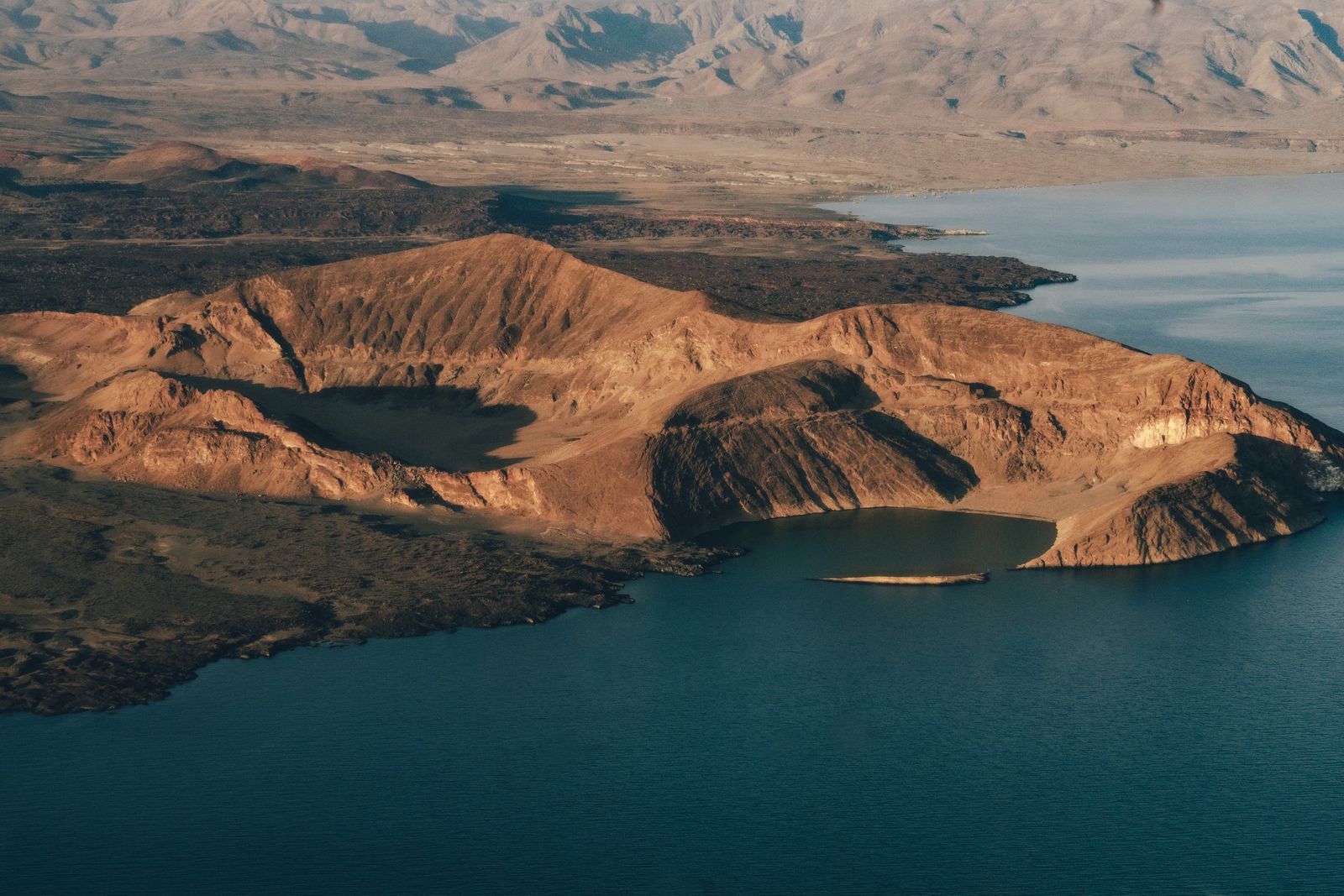
We cross the black lava of the Barrier, and the Jade Sea lies on the far side. Lake Turkana is more than 250 kilometres long and the largest permanent desert lake in the world. Count Sámuel Teleki and Ludwig von Höhnel, the first Europeans known to have seen it, reached its southern shore on 6 March 1888 and named it Lake Rudolf, after Crown Prince Rudolf of Austria. It was renamed Lake Turkana in 1975. The Turkana call it Anam Ka'alakol, "the sea of many fish".
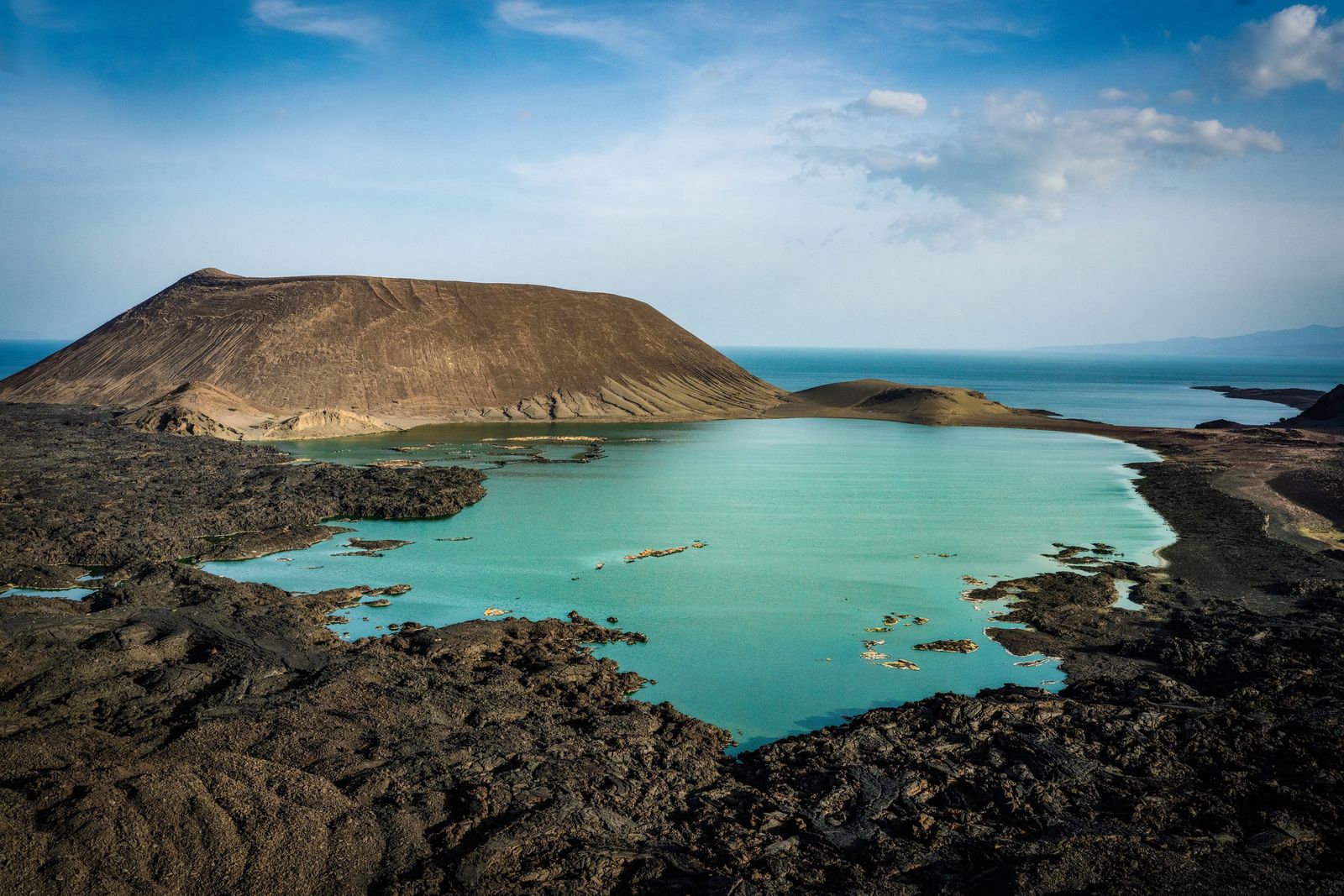
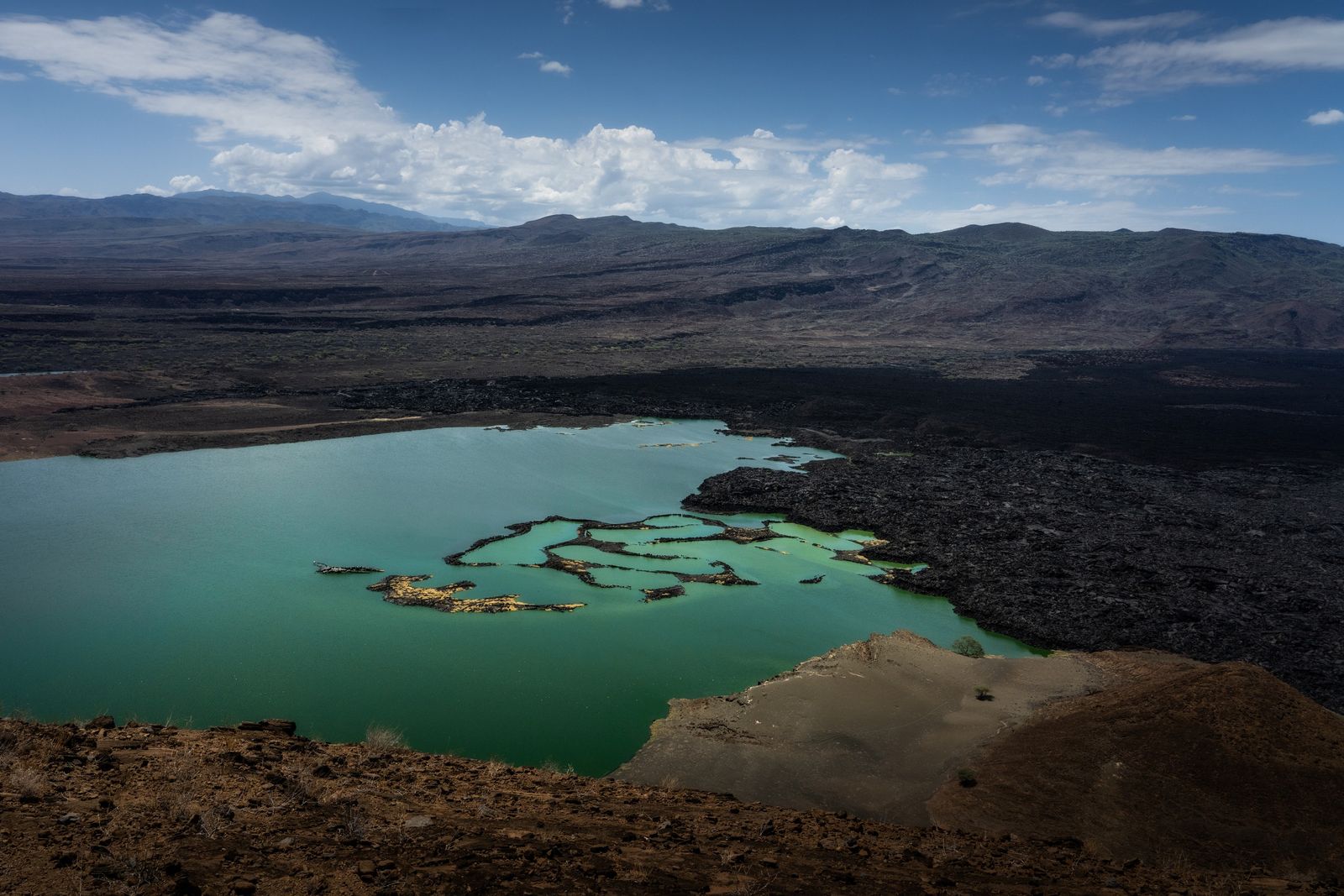
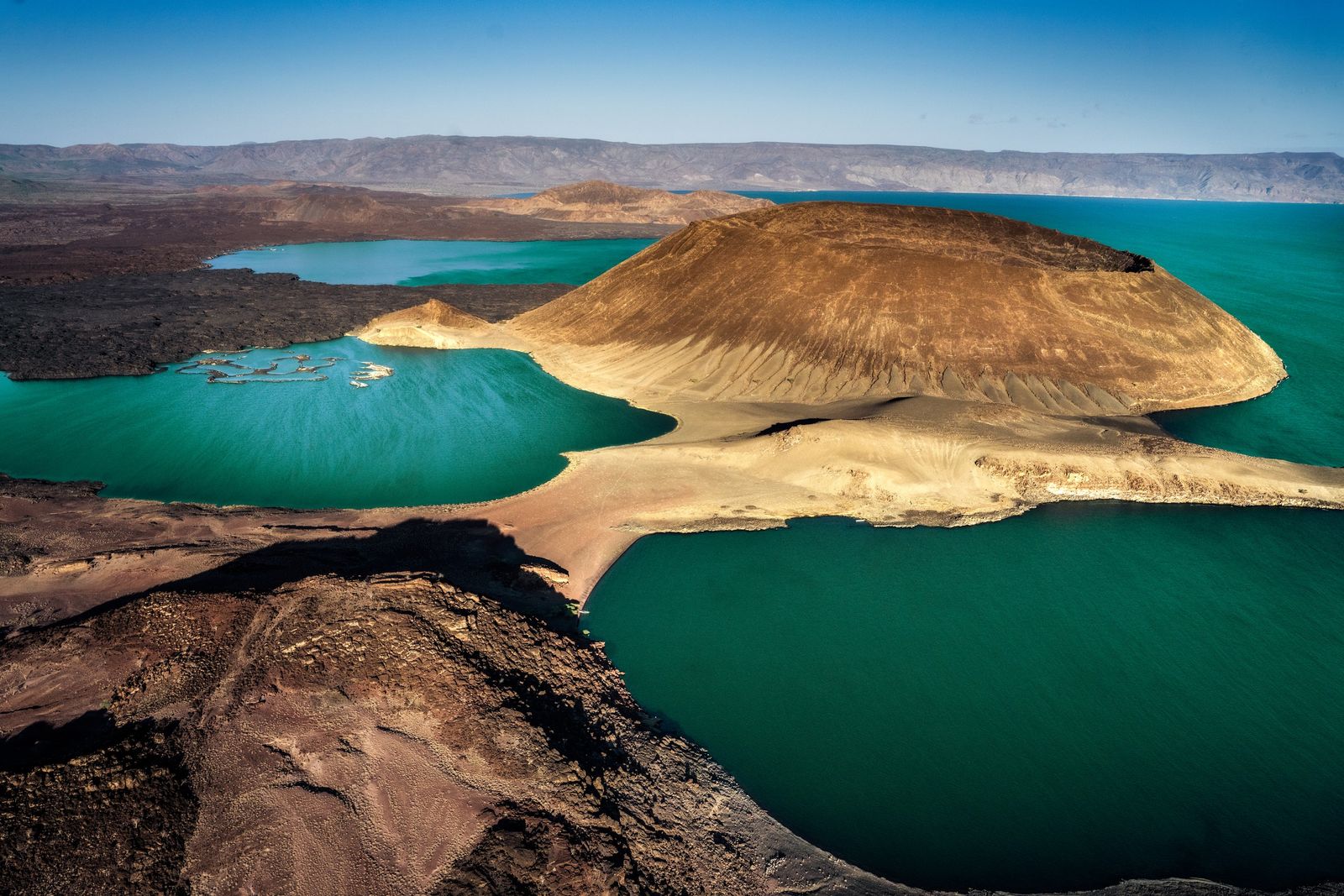
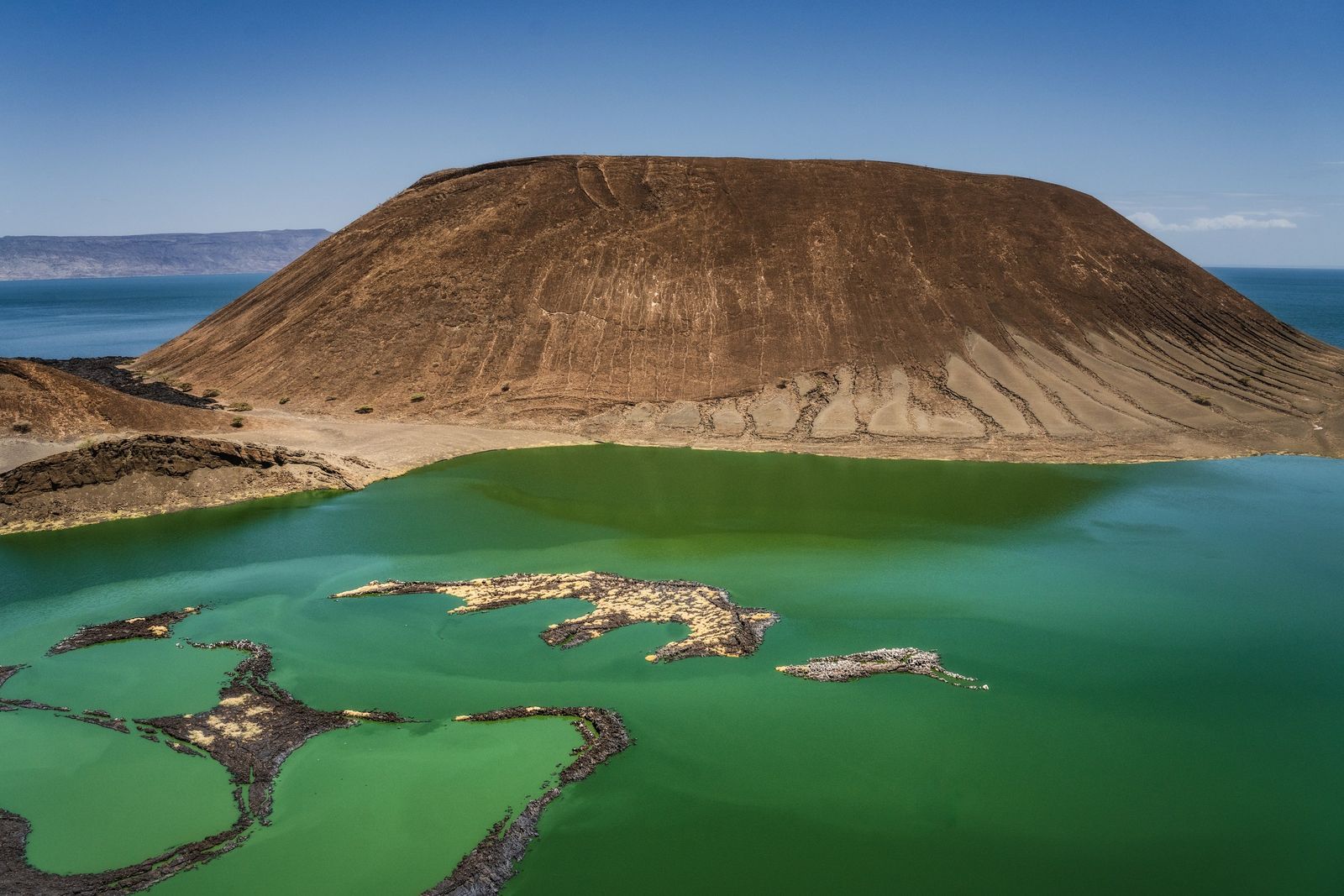
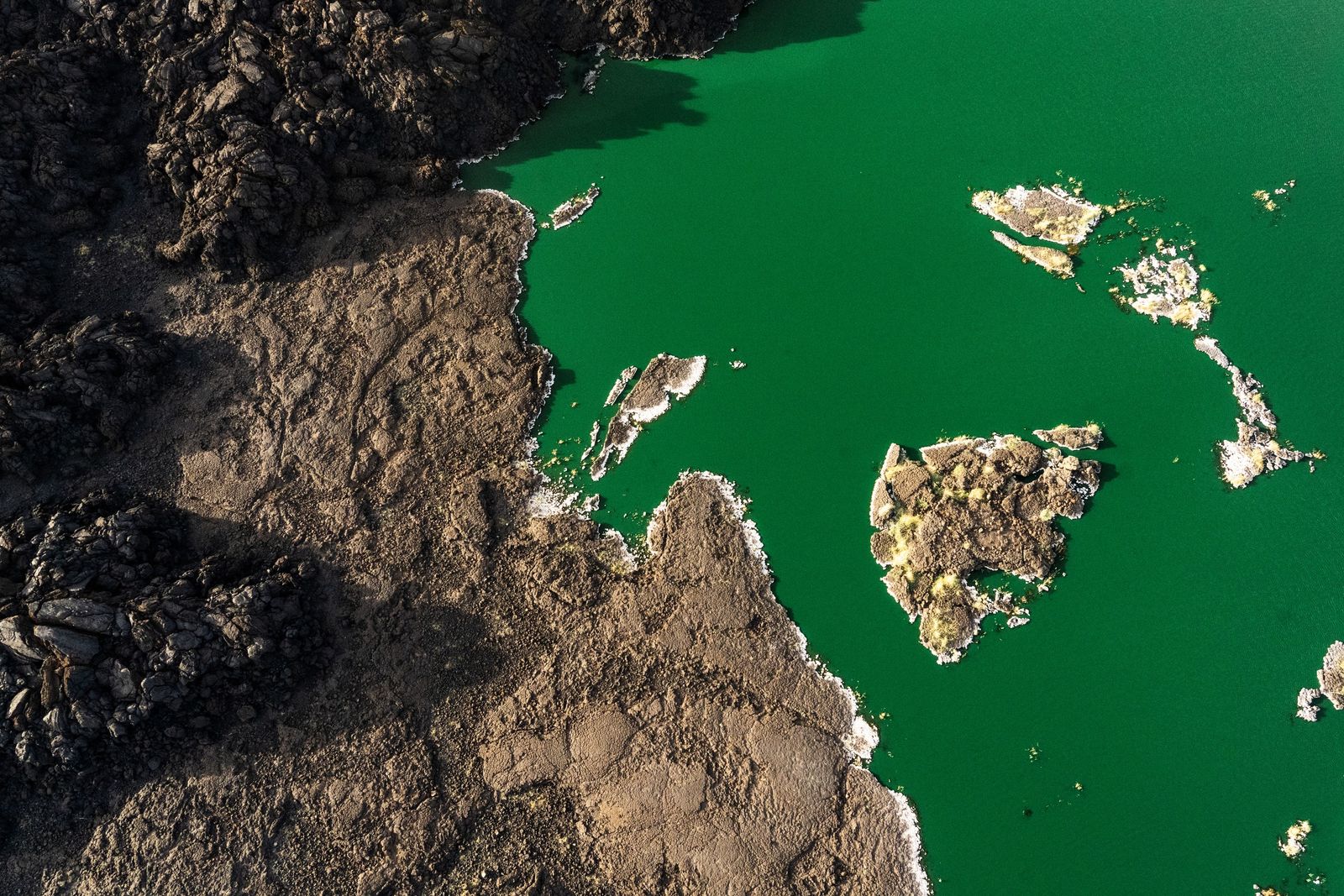
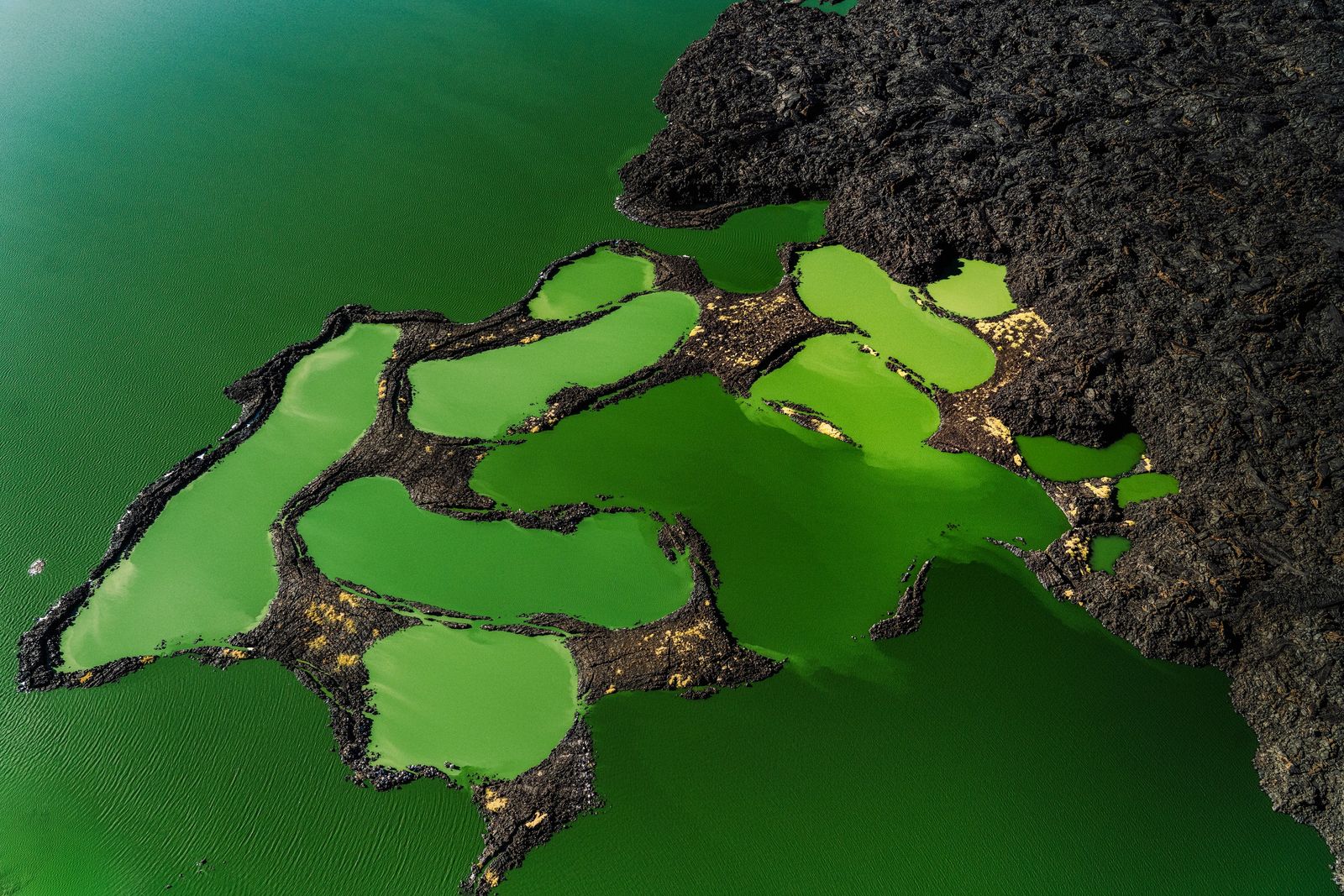
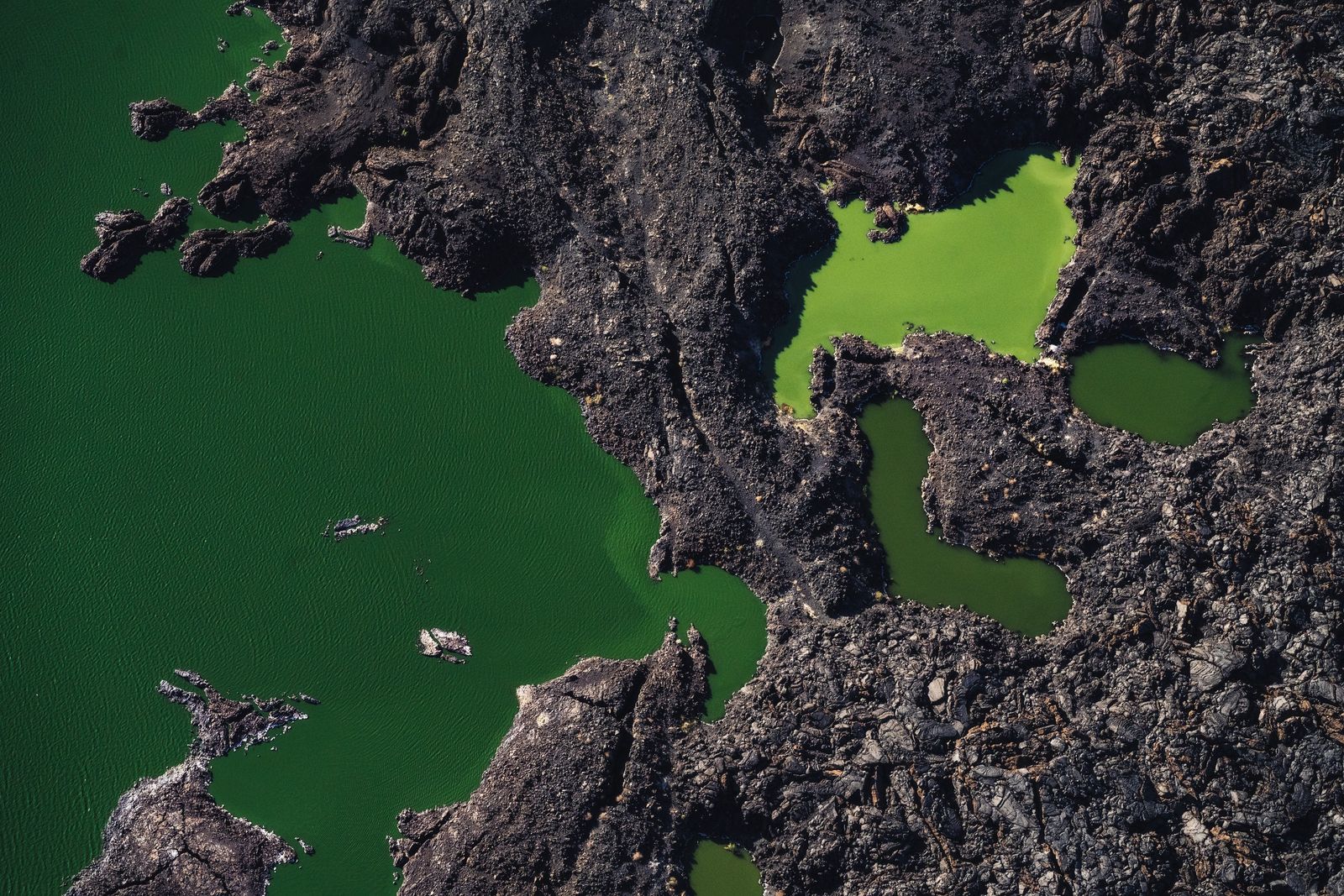
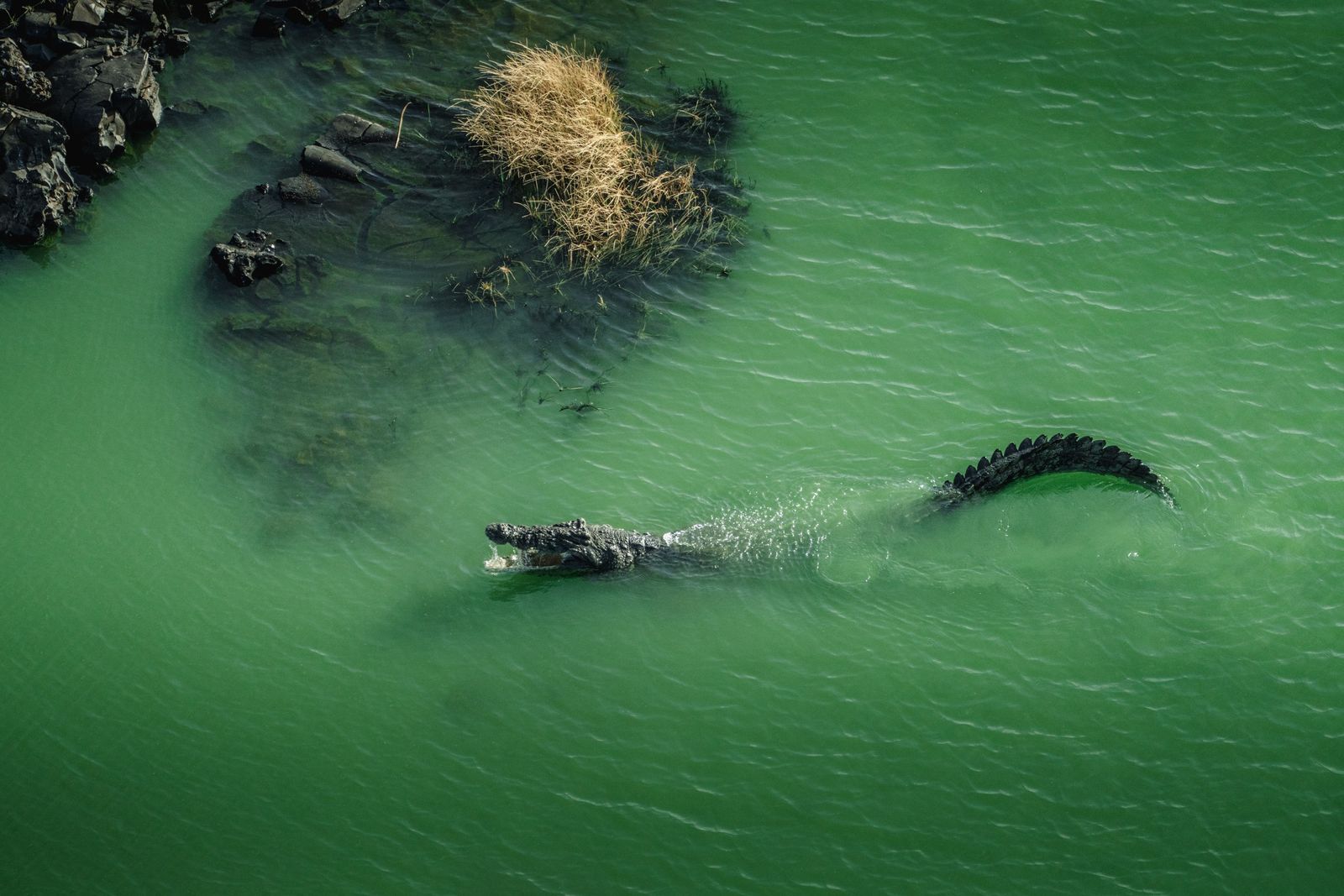
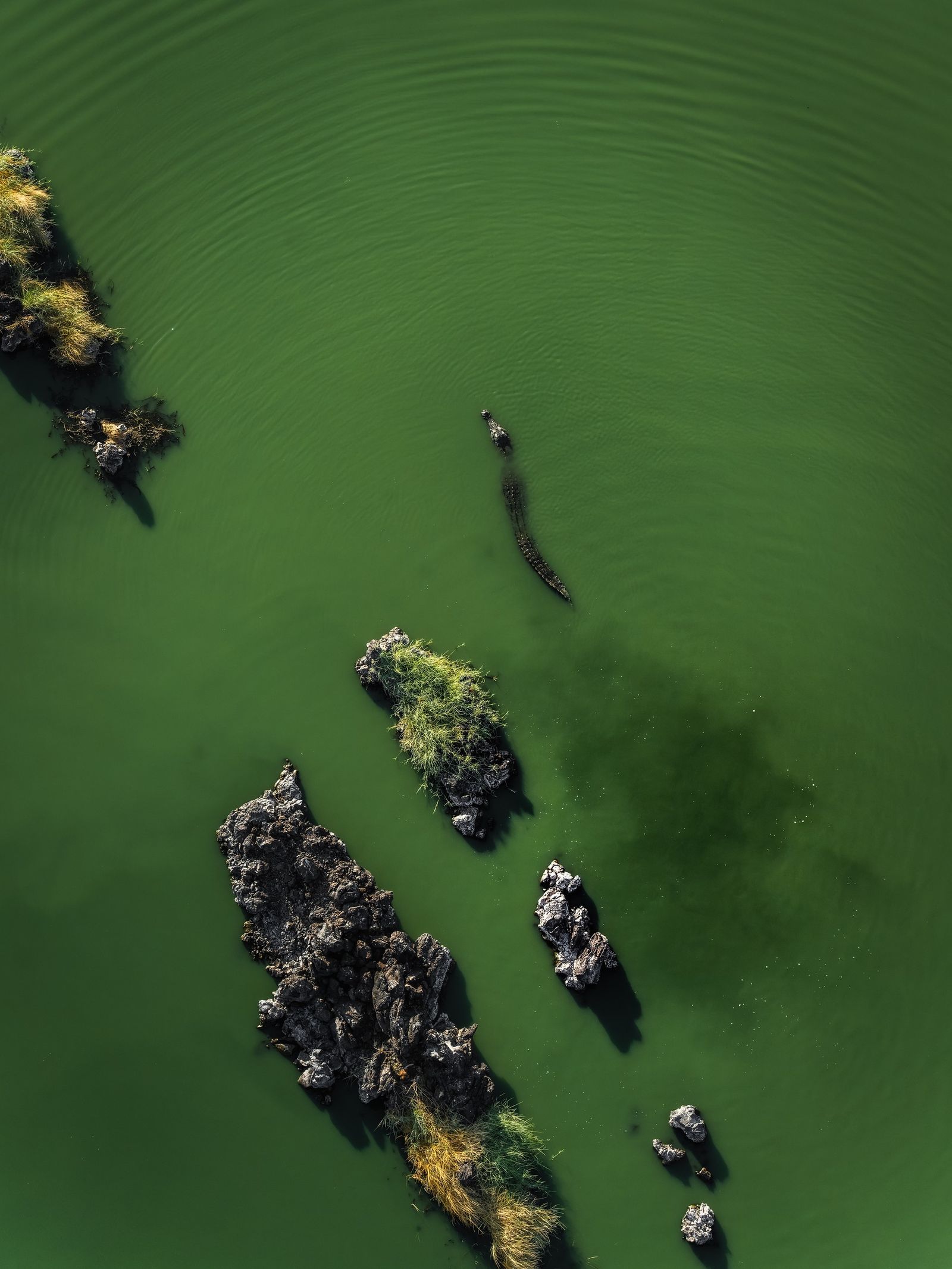
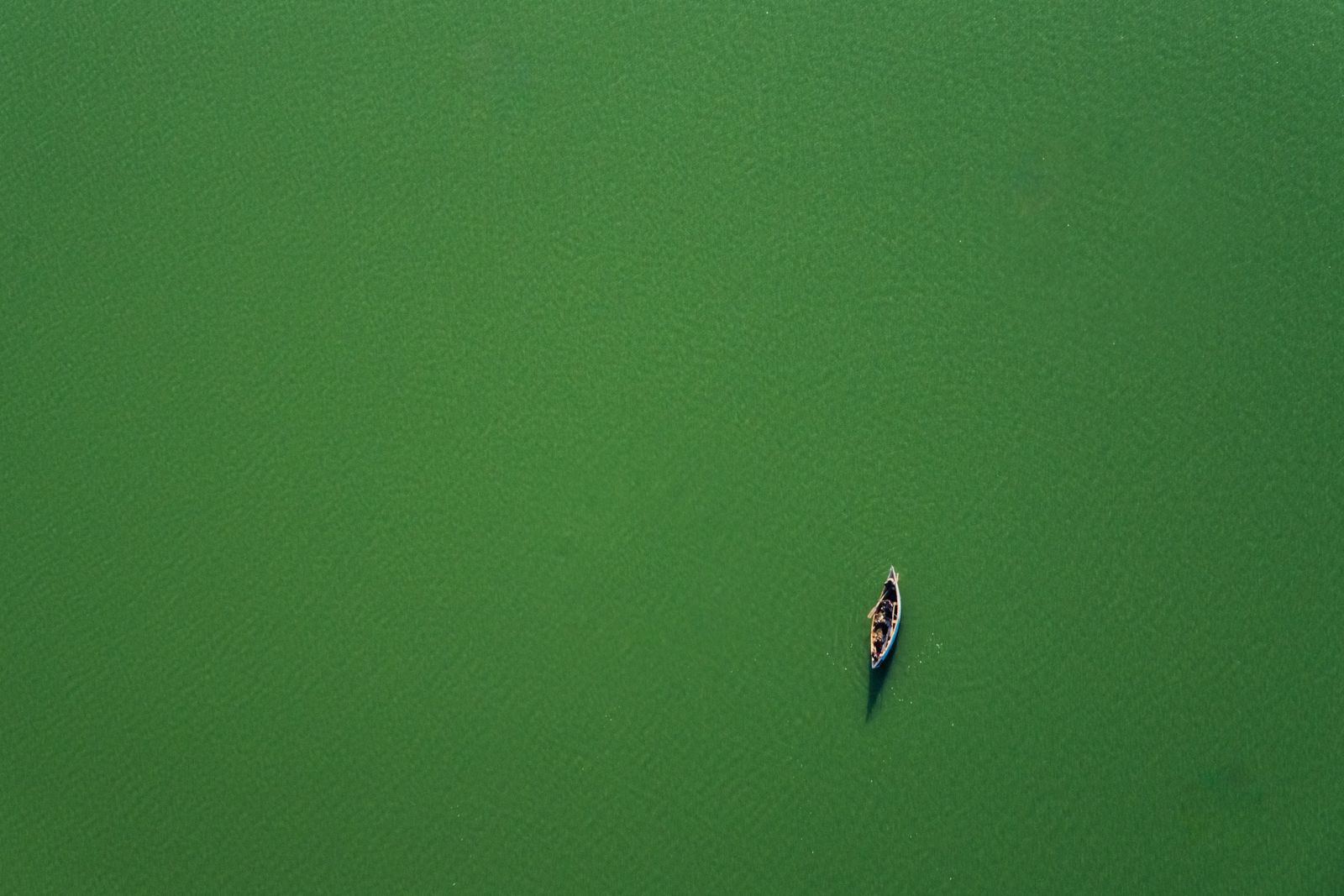
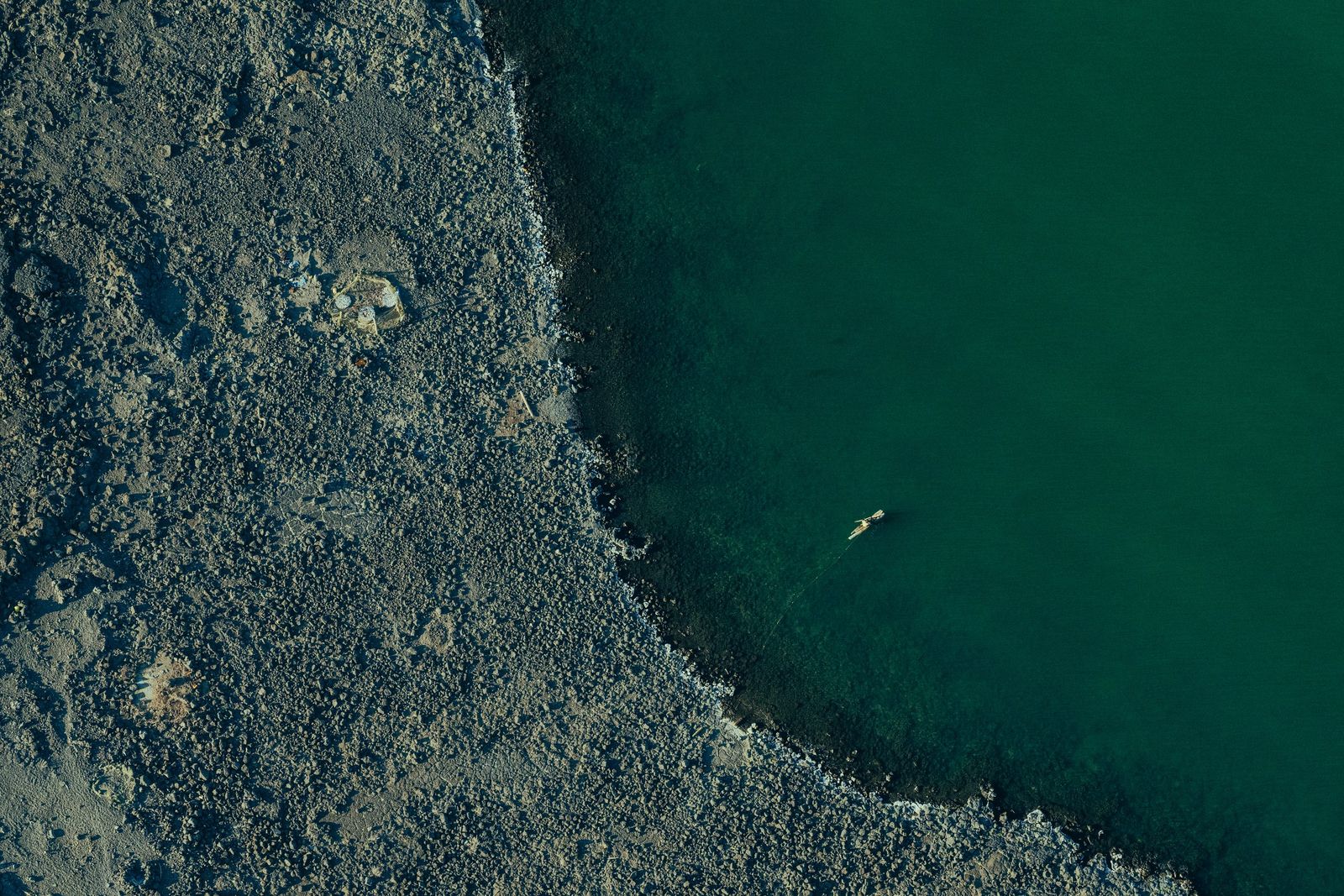
The green comes from algae, which rise to the surface when the water is calm and turn the lake the colour of jade. The colour is strongest in the lagoons at the southern end, where lava has cut small bays off from the lake and the shallow water lies emerald and turquoise against black rock.
Nabuyatom
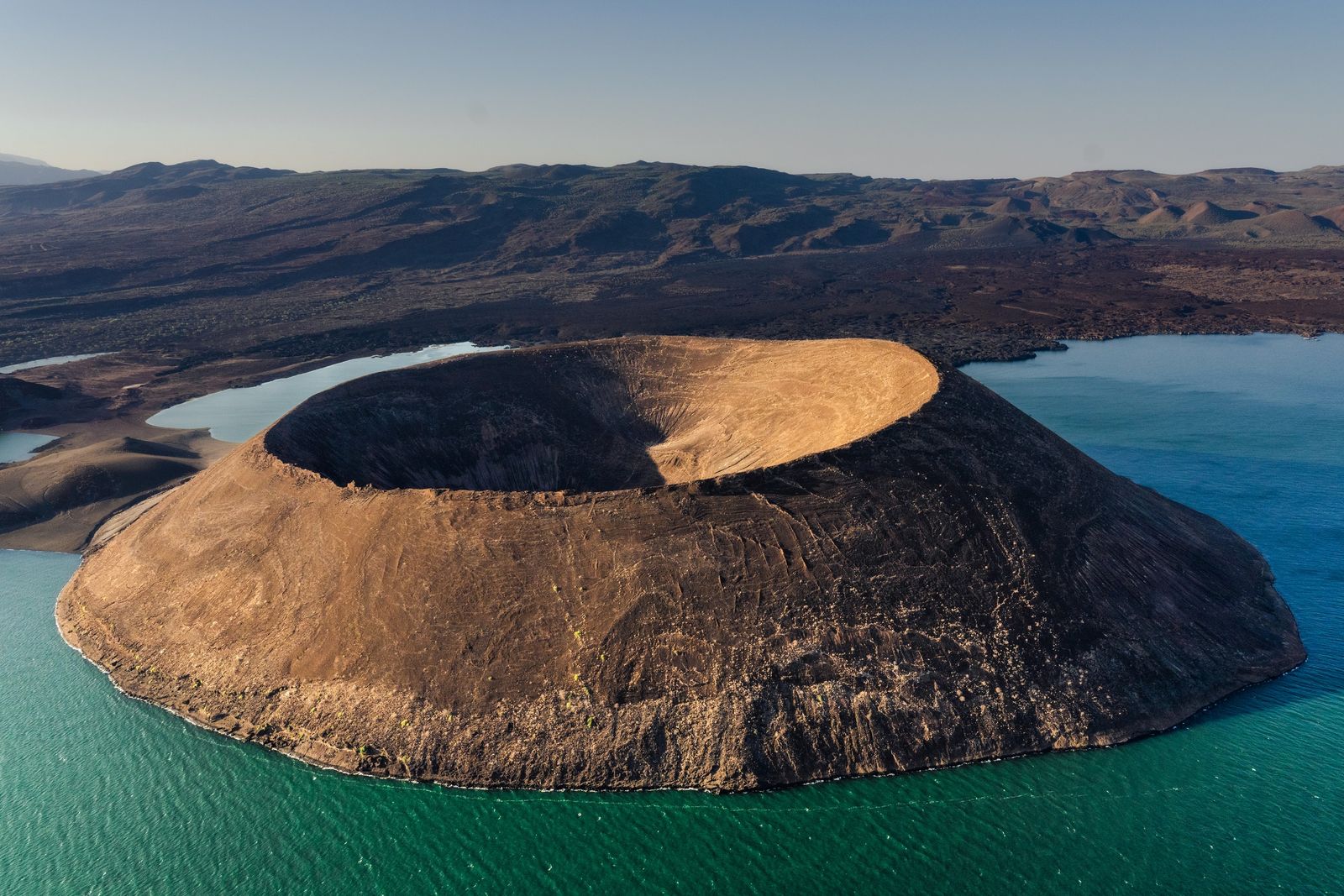
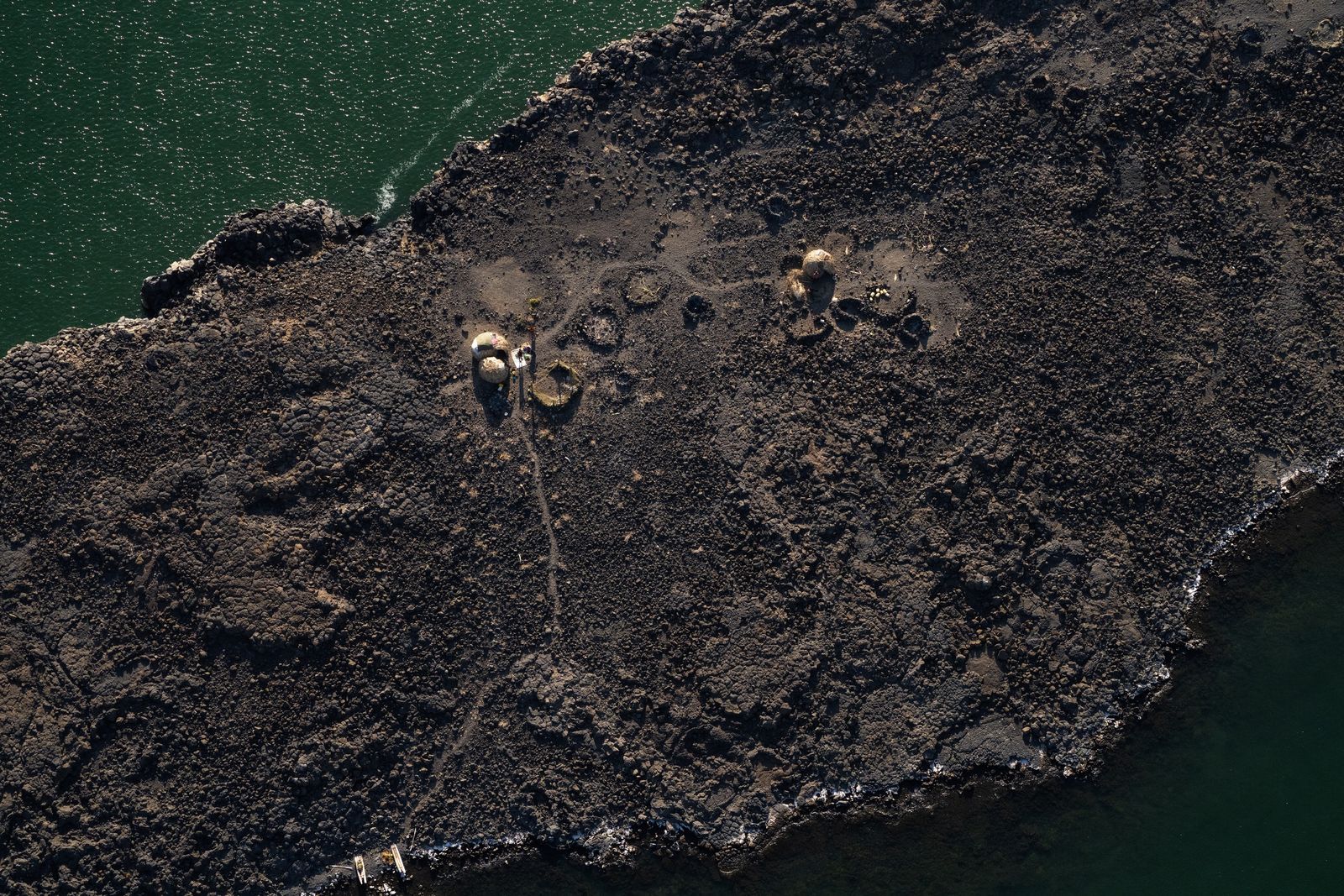
We reach the lake at its southern shore, where Nabuyatom eerily stands, a cone of volcanic ash with an almost perfectly round crater, one of the cones of the Barrier volcano. In the language of the El Molo, the people of this shore, its name means "the elephant's belly", and their story says that the first people came into the world from inside it.
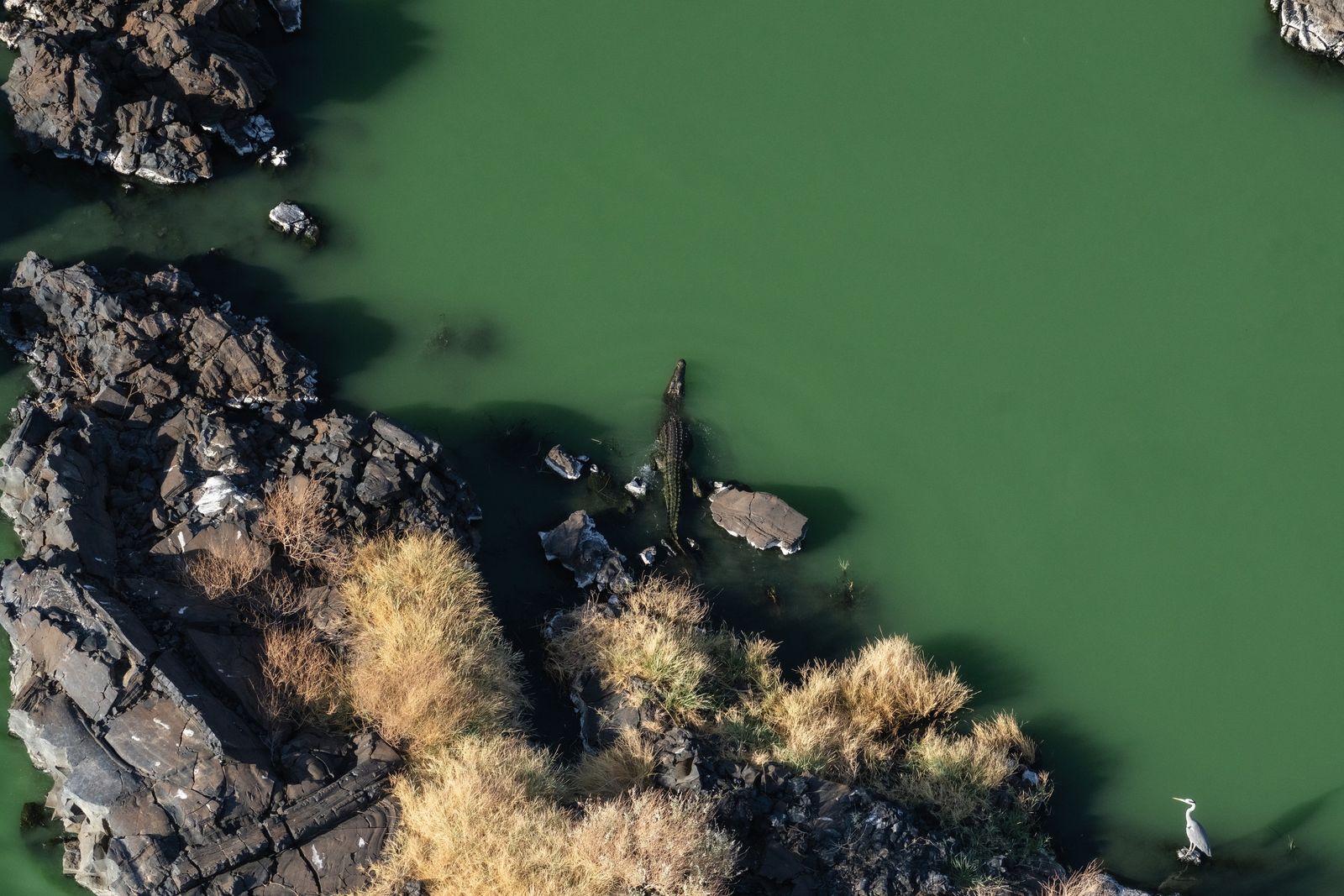
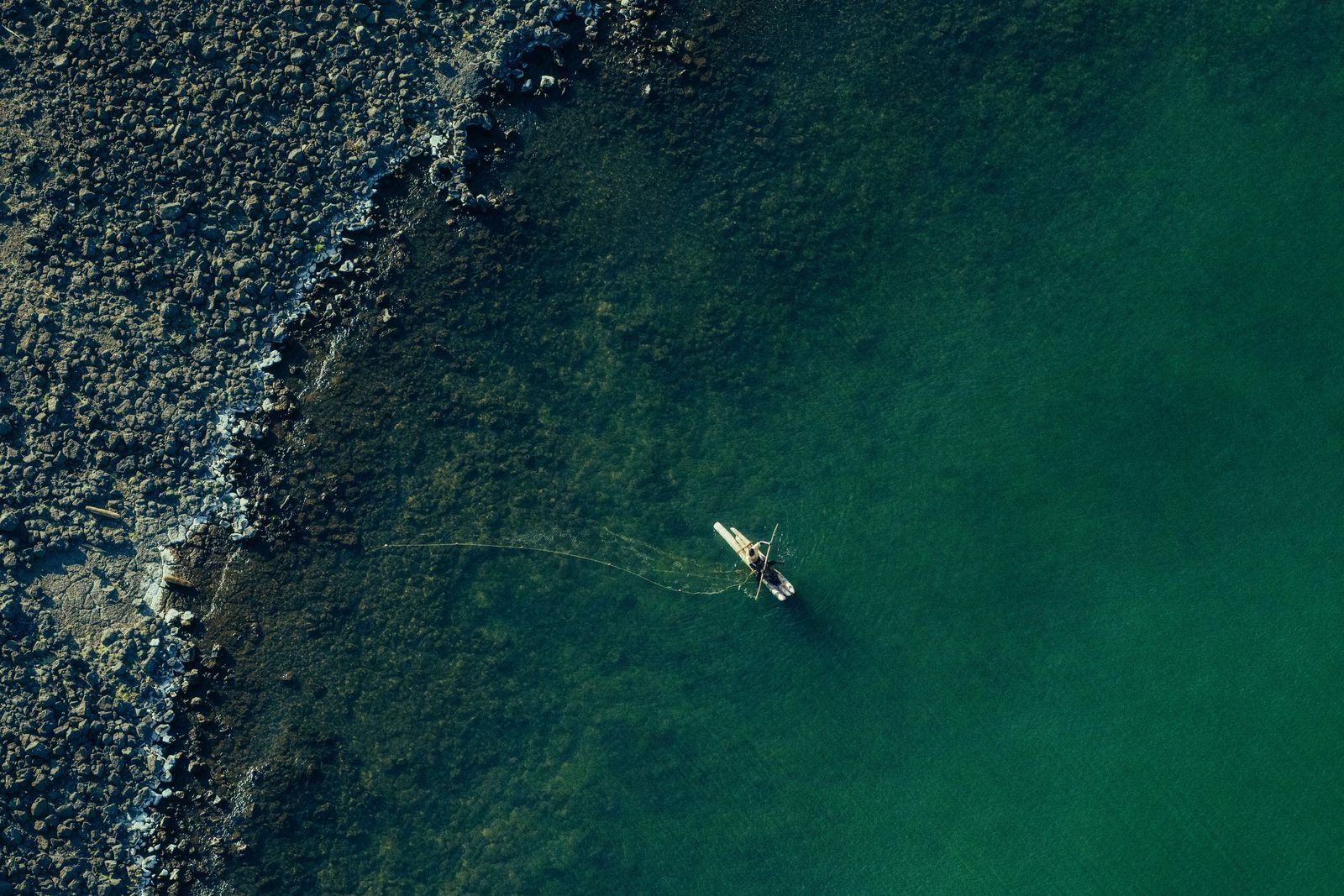
Around it, fingers of black lava reach into the water and hold small pools of brighter green. Fishermen work the lake in small boats and on rafts of logs, and their huts stand on bare lava at the shore.
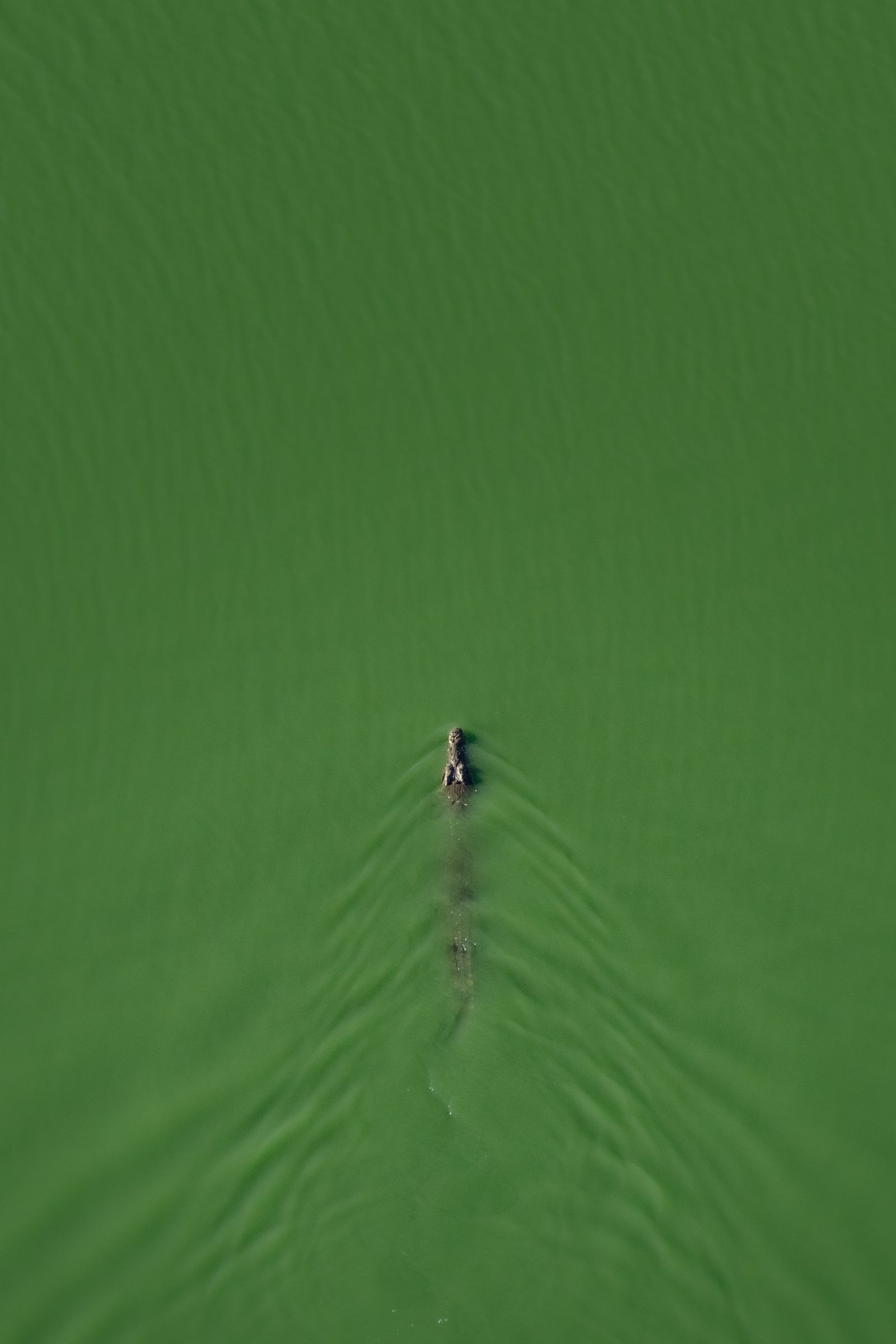
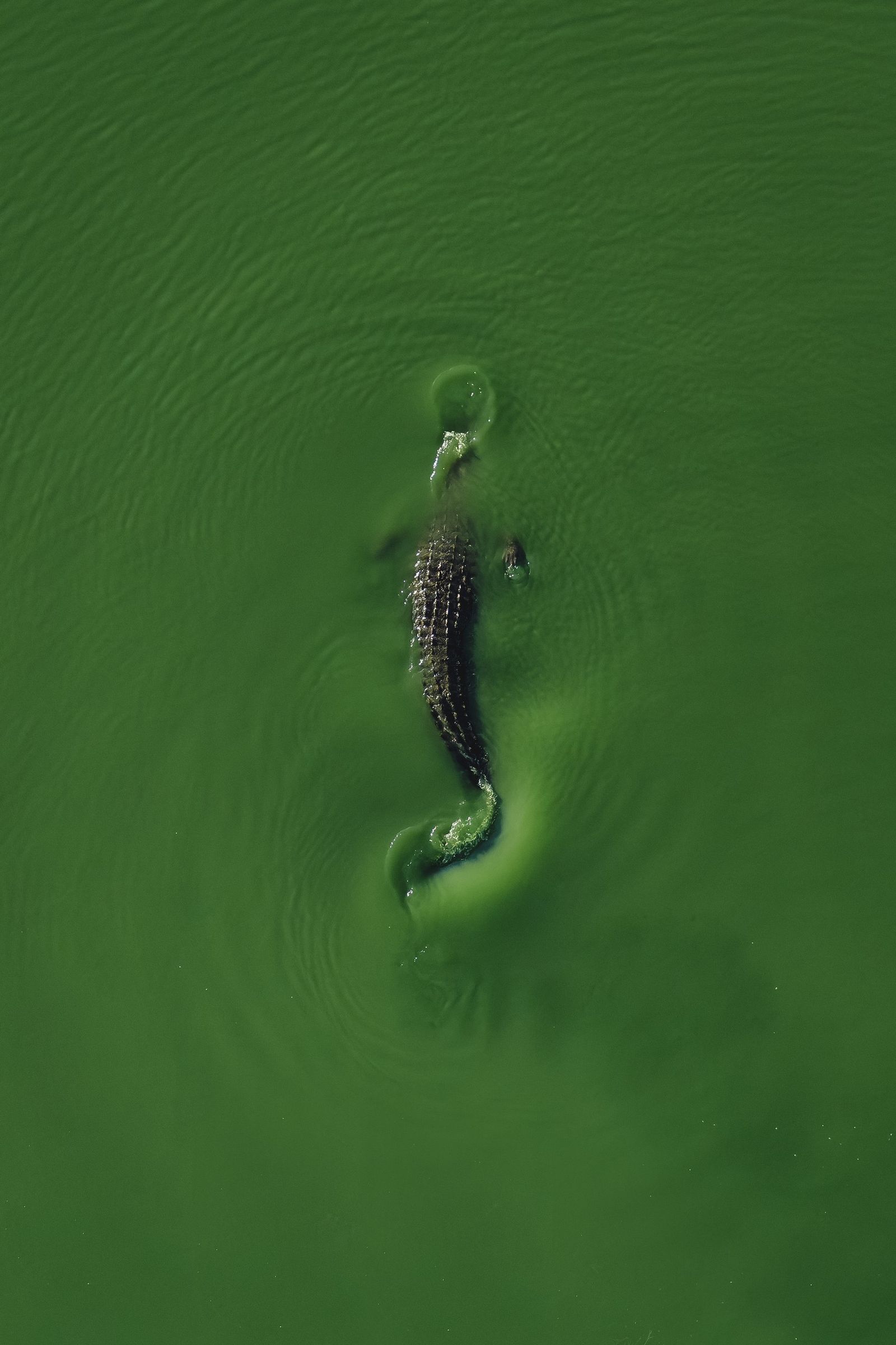
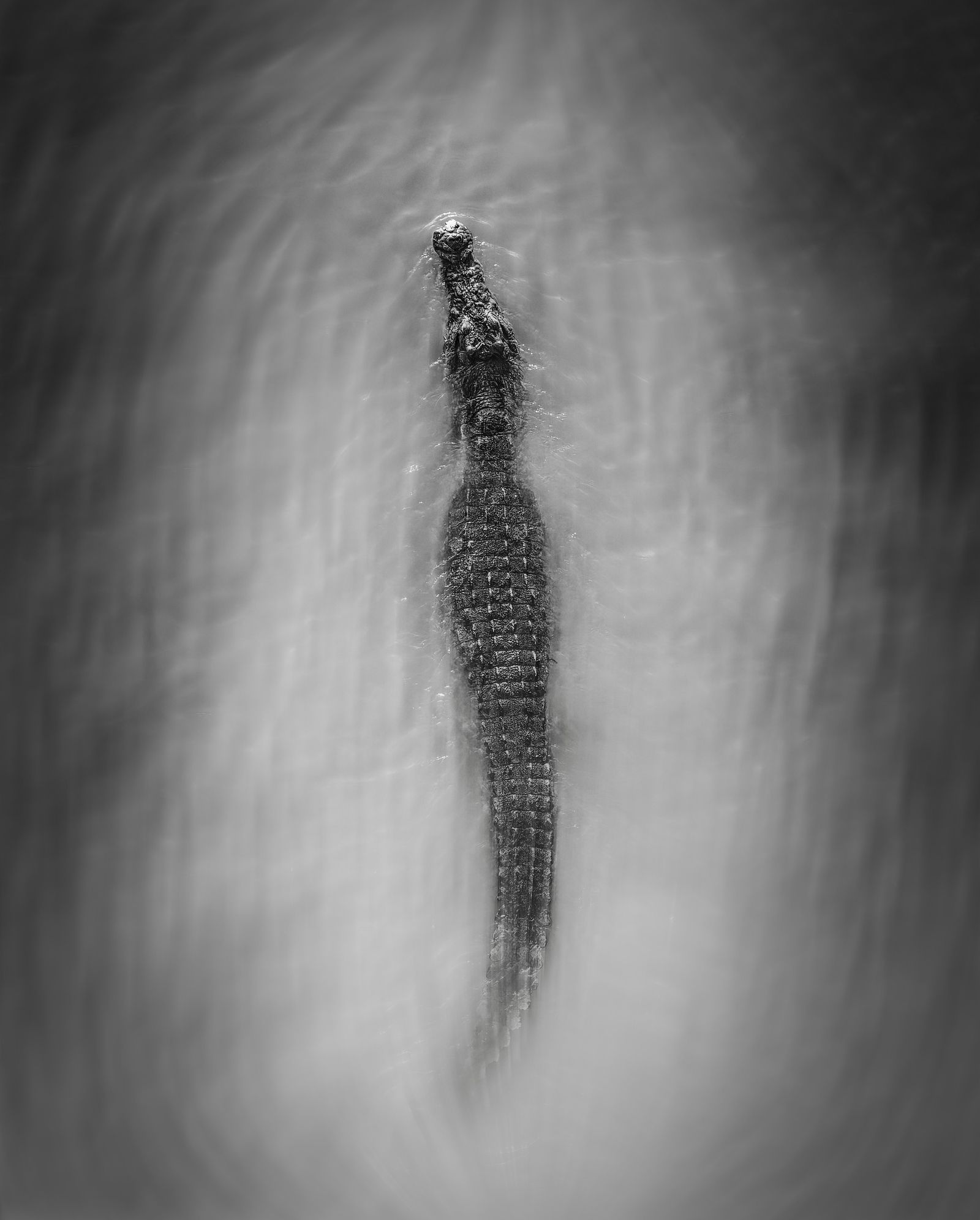
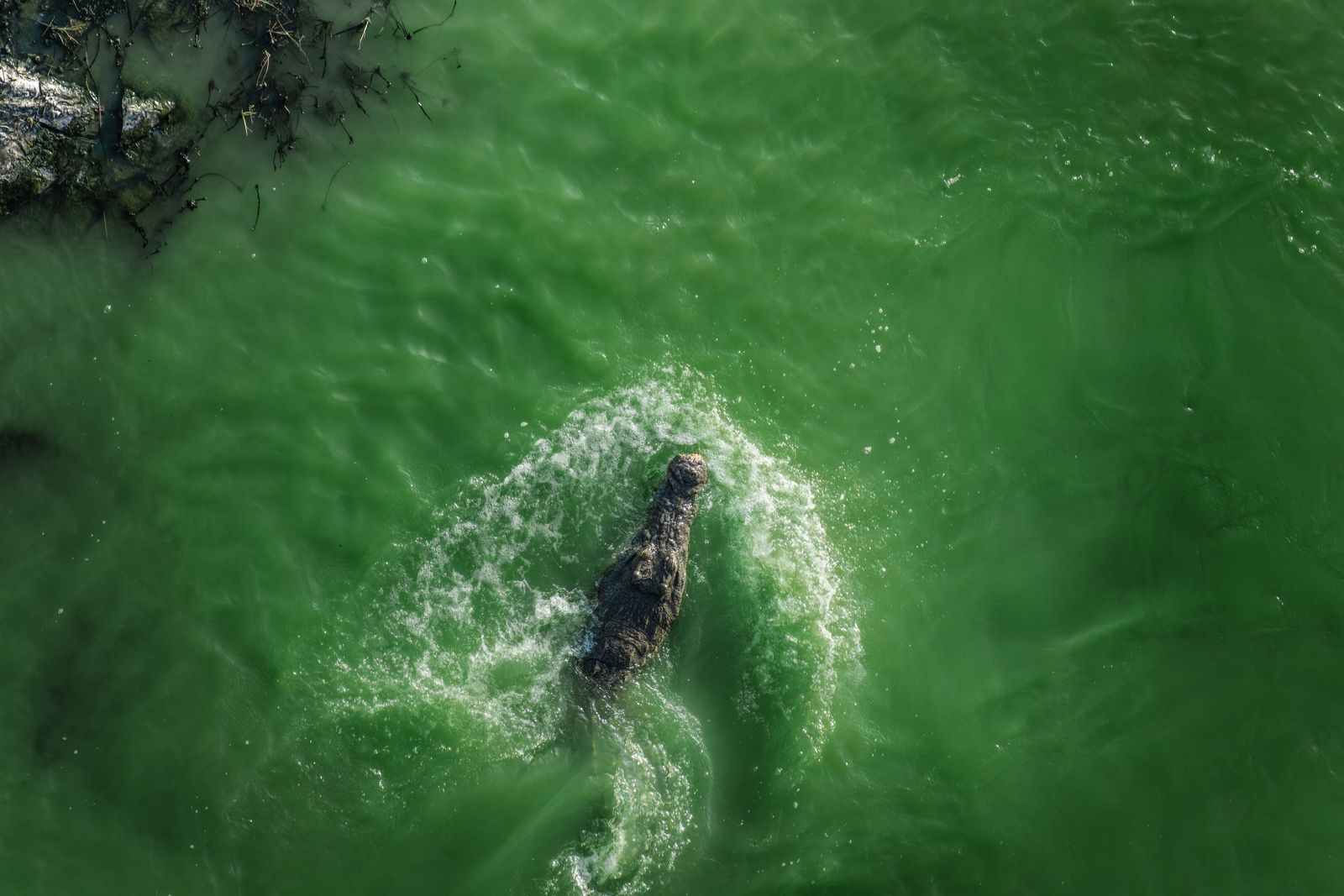
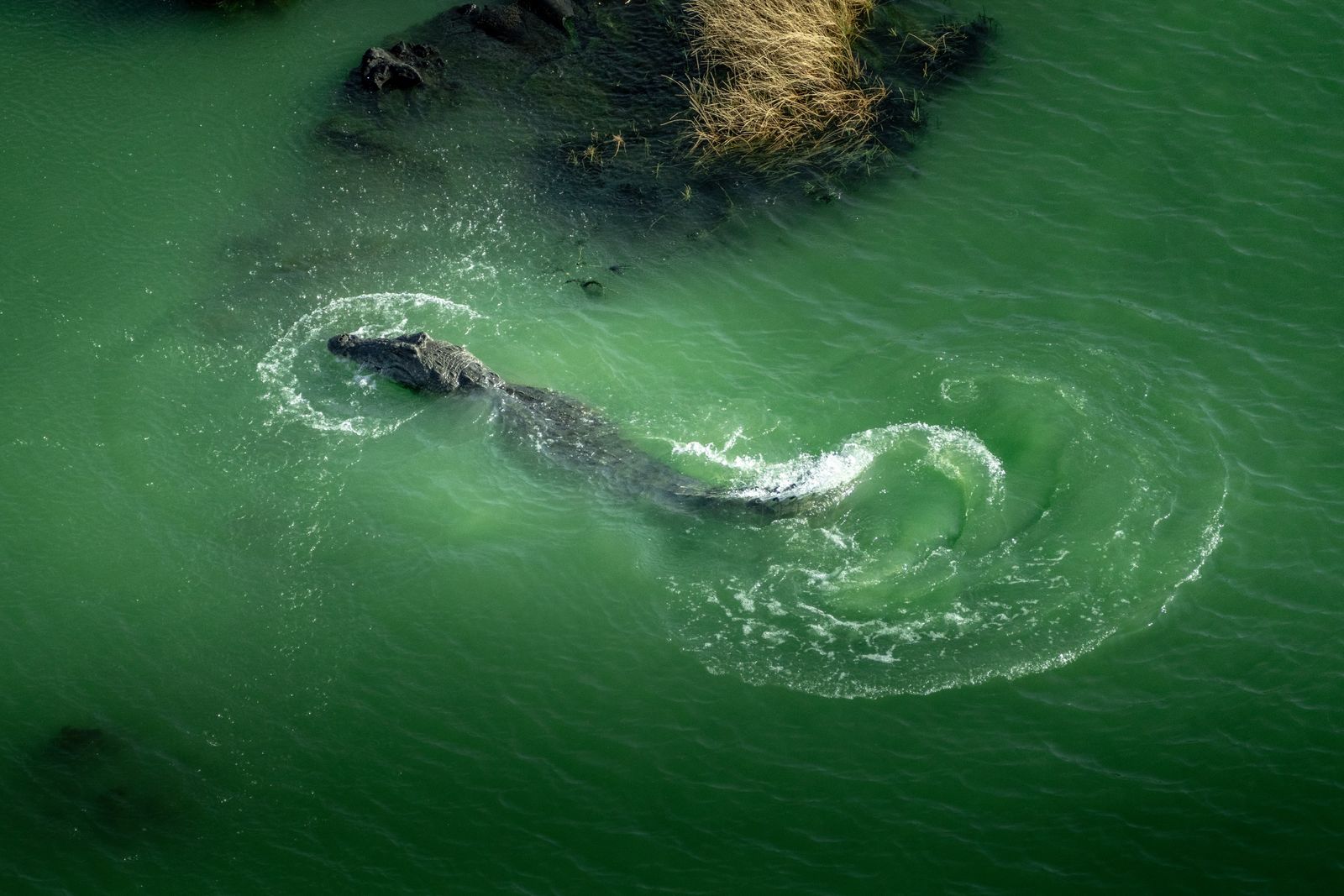
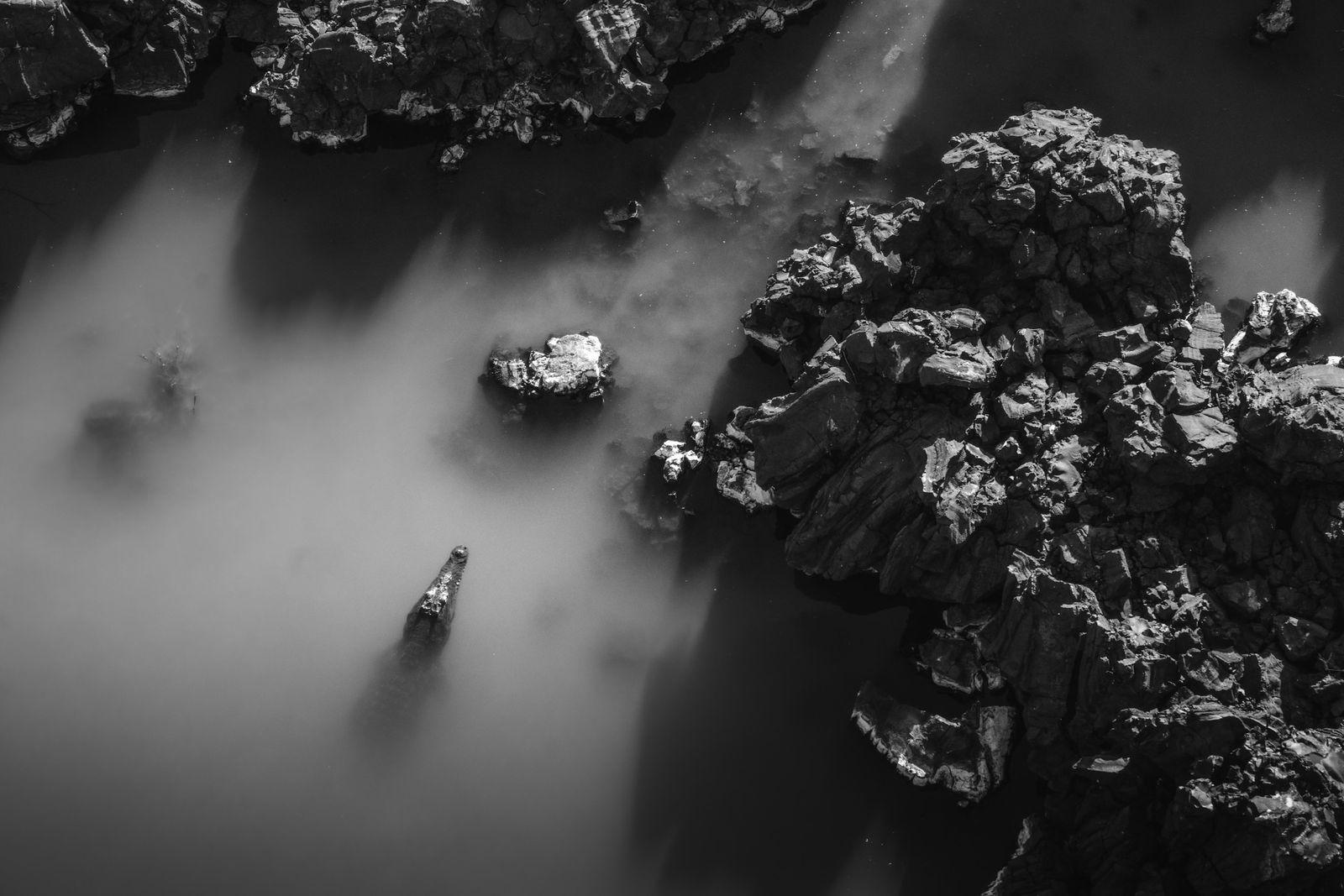
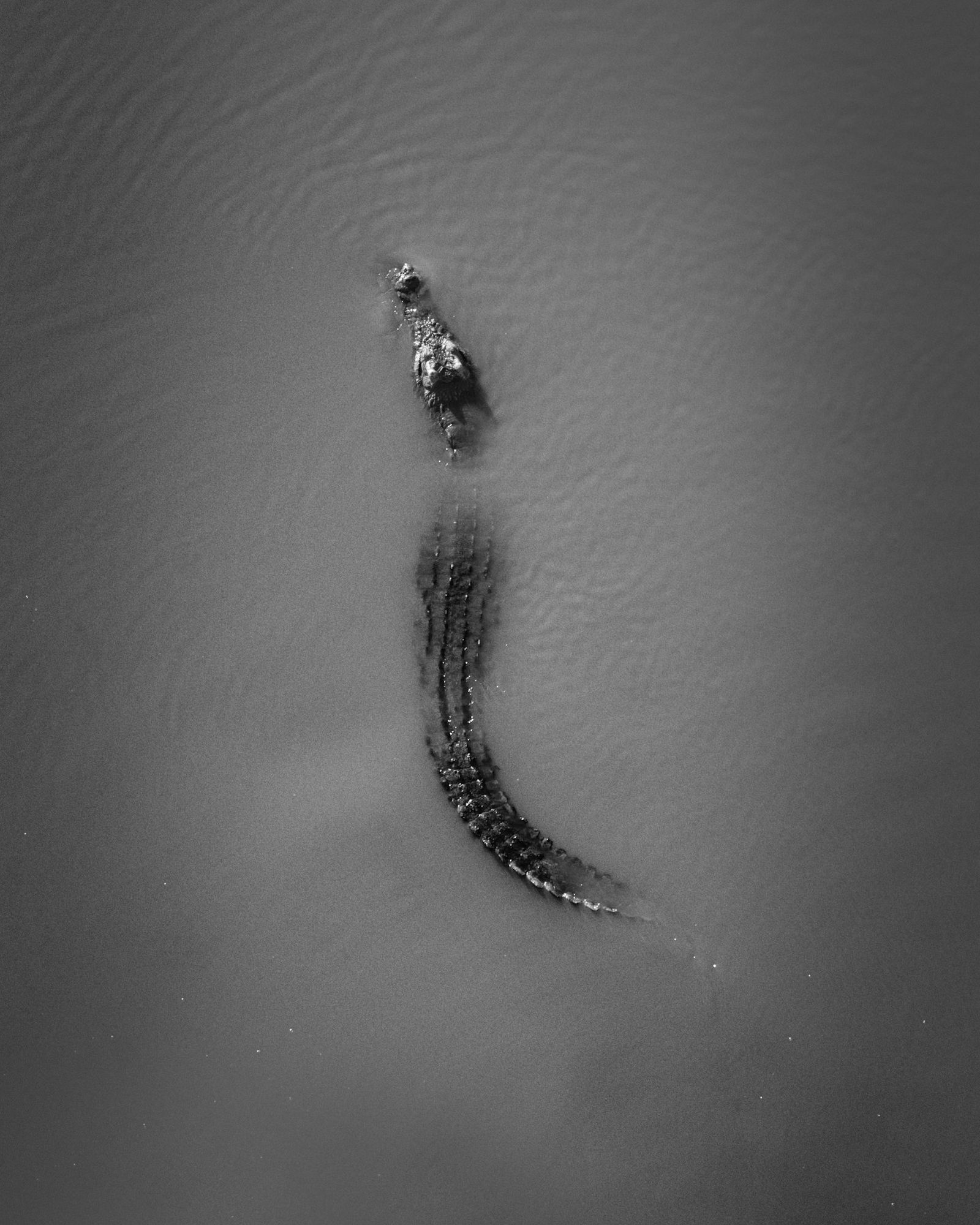
The lake is known for its crocodiles. In the late 1960s the biologist Alistair Graham spent several years studying them, and found one of the largest populations of Nile crocodiles in Africa. With the photographer Peter Beard he made a book of that work, Eyelids of Morning, published in 1973. Its title comes from the Book of Job, where the eyes of Leviathan are "like the eyelids of the morning". Beard took many of its pictures from a small plane flying low over the water. From above, the crocodiles show as dark shapes hanging in the green, as they still do in these photographs.
Rock Art
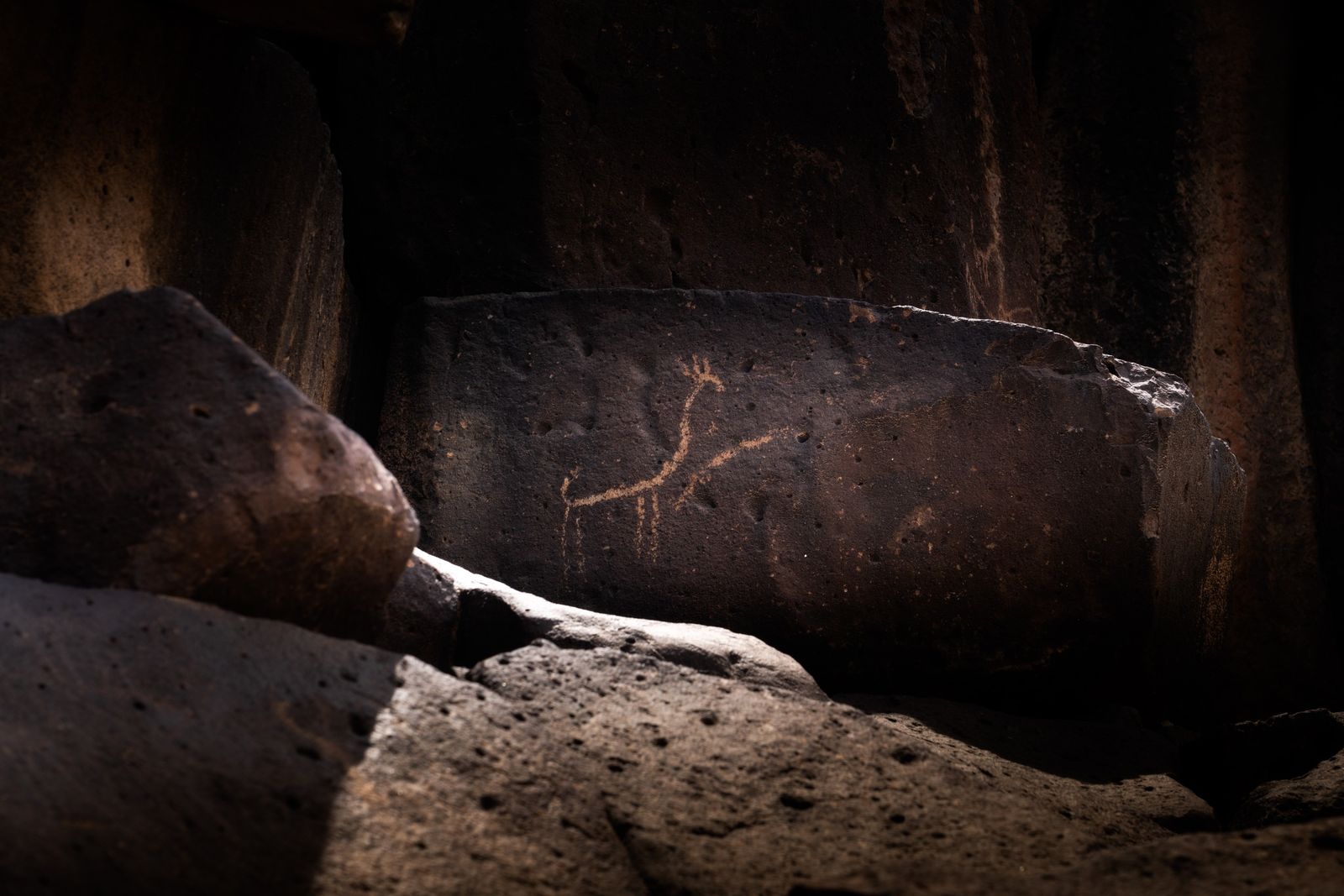
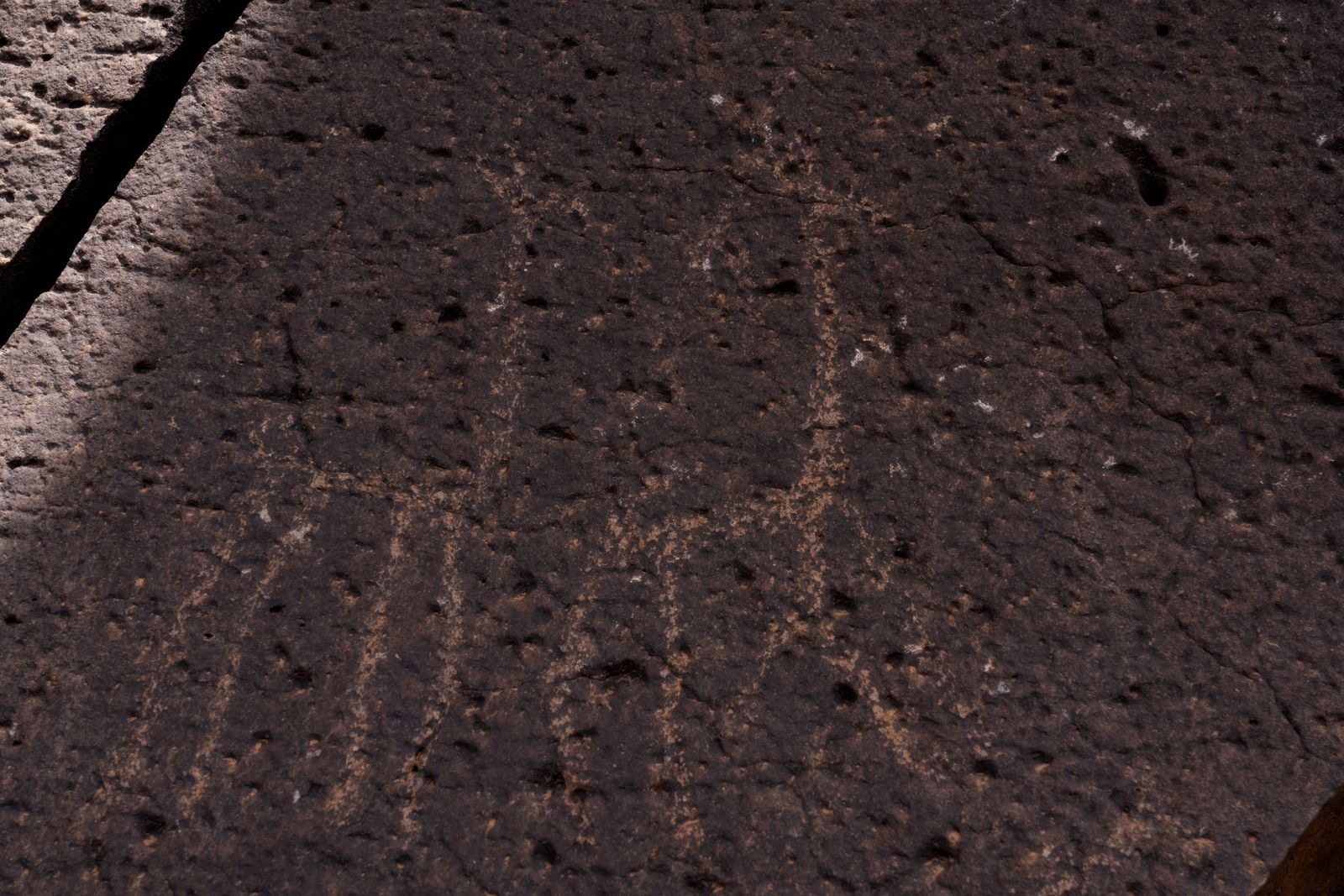
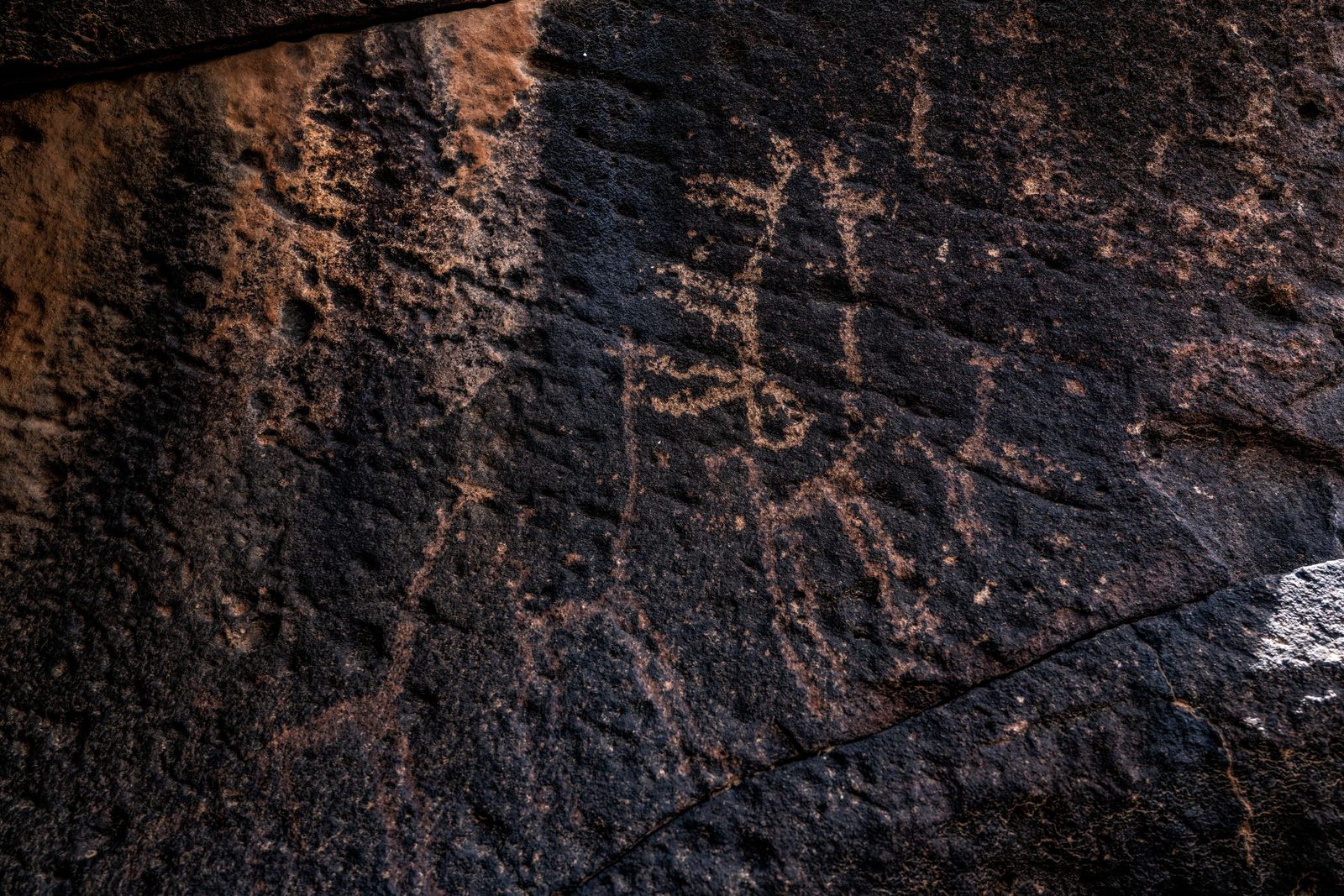
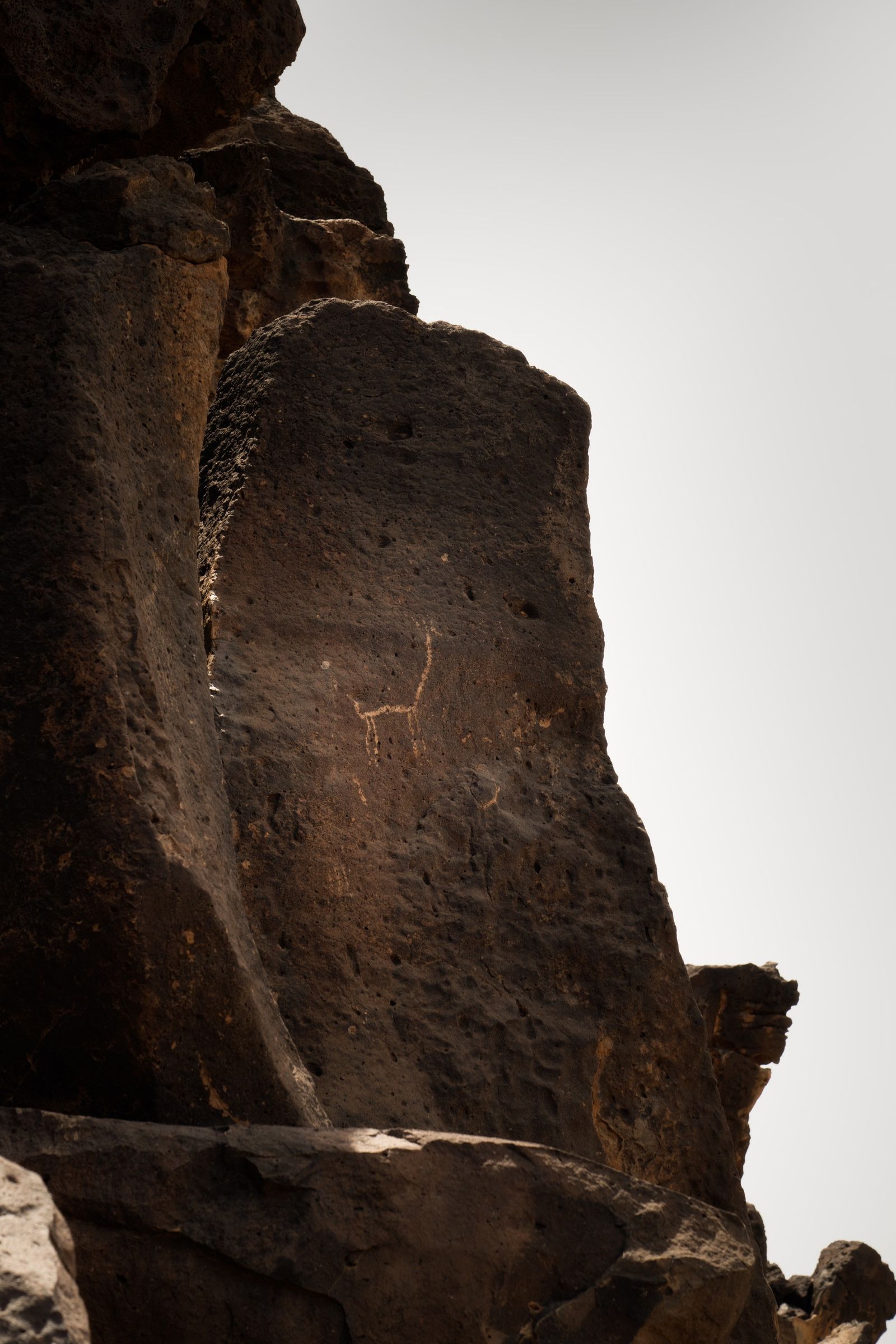
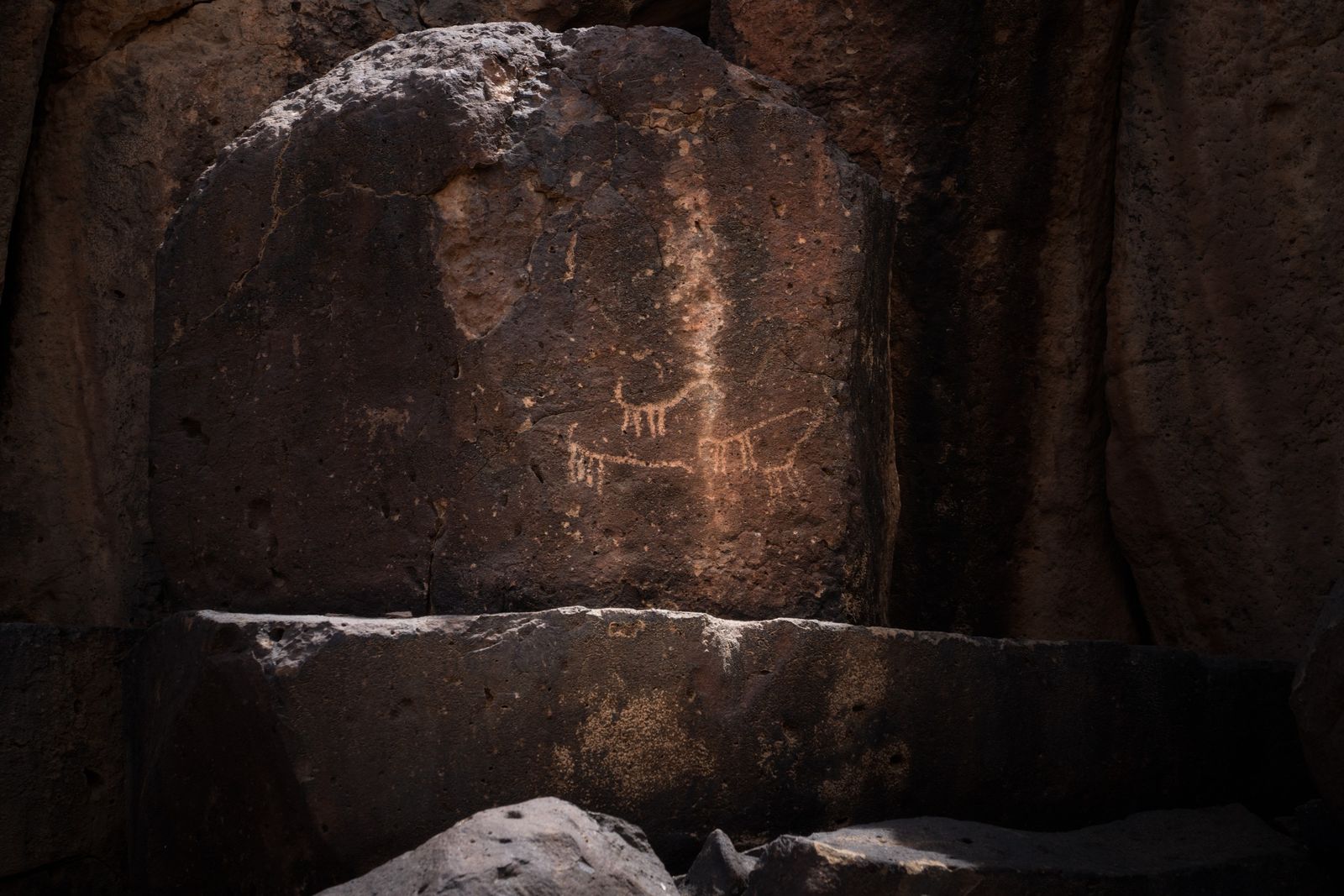
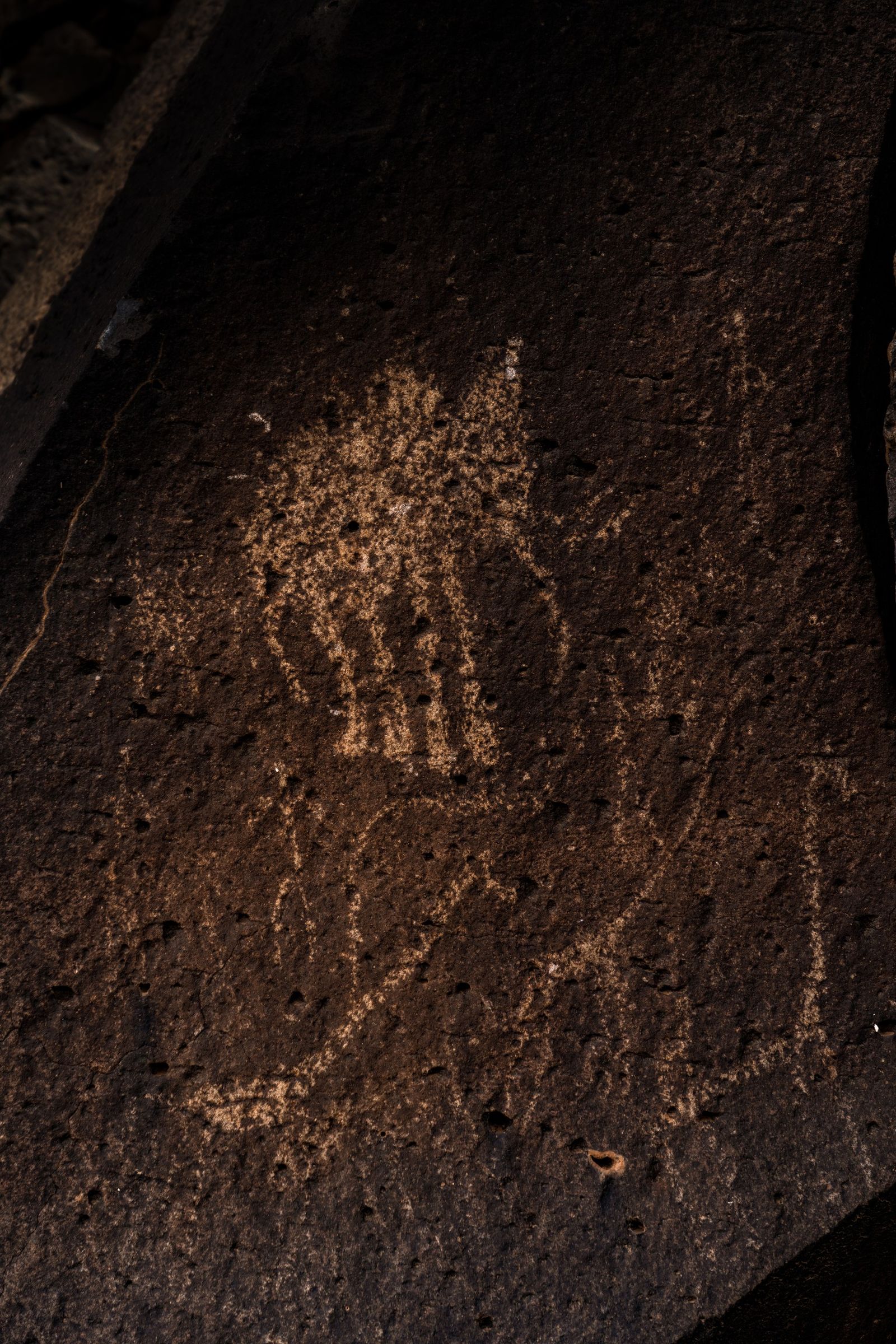
In a dry gully east of the cone we find giraffe tapped into the dark crust of the rock by people who lived here, probably between two and ten thousand years ago. Giraffe no longer live here, and the pictures suggest the country was greener when they were made. Obsidian, a black volcanic glass that is rare in this area, has been found at sites from this period, so it must have been carried here from far away.
People and their ancestors have known this lake for far longer. Bones of some of the earliest human ancestors have been found around its shores, the oldest more than four million years old. On the western shore in 1984, searchers found the Turkana Boy, a boy who died about one and a half million years ago, and one of the most complete skeletons of an early human ever found. Our journey ends where so much of the human story began.
Fine art prints from Lake Turkana
15 numbered limited editions. From 900 USD.
The journey ends here for now. There is more of it than fits on a screen, and it is becoming a book. Leave your address to hear when it is ready.
A few letters a year. Unsubscribe with one click. Privacy